



















































45-Million-year-old snakehead fish skull unearthed in Subathu Formation ÔÇö A Landmark Discovery for Tethys Fossil Museum
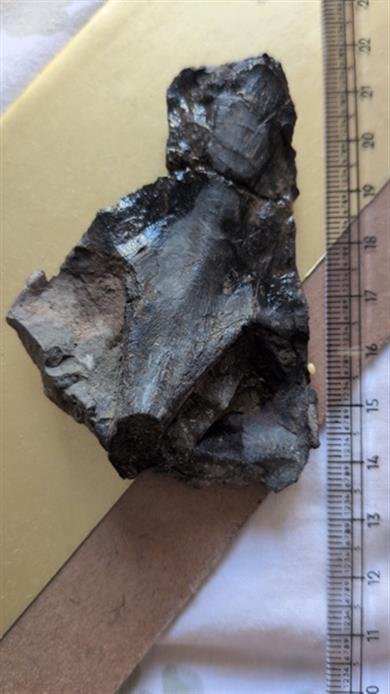
KASAULI (HP): A remarkably preserved snakehead fish skull, dating back 45 million years to the Eocene epoch, has been discovered from the Subathu Formation near Subathu, Himachal Pradesh, by Dr. Ritesh Arya, founder of the Tethys Fossil Museum. The fossil has been identified by Prof. Rajeev Patnaik, Geology Department, Panjab University, Chandigarh, and hailed as a landmark discovery by Prof. Ashok Sahni, eminent paleontologist and Emeritus Scientist, now based in Lucknow.


Dr. Arya discovered the fossil in a small stream cutting through the┬áSubathu┬áFormation ÔÇö sedimentary rocks that record the final stages of squeezing of the Tethys Sea and early stages of India's collision with the landmass after it drifted from the Africa and was part of Gondwana land . “Finding a freshwater fish in marine┬áSubathu┬ásediments reinforces our understanding that these layers were formed in a shallow marine environment during the Eocene. It also provides a glimpse into the transitional ecosystems that existed during India's northward drift and events which preceded the squeezing of the Tethys and evolution of continental conditions,” said Dr. Arya.
Prof. Patnaik noted, “I have earlier found similar snakehead fish fossils from the Siwalik sediments of┬áSaketi, but those are much younger ÔÇö around 3 million years old ÔÇö and clearly freshwater. This new find from┬áSubathu┬áis remarkable because it represents the early ancestors of the group in a marine setting.”
Prof.┬áSahni, who has extensively studied Eocene faunas from the┬áSubathu┬áBasin, remarked, “Though snakehead-like fish have been reported earlier from the┬áSubathu┬ásediments, this specimen stands out for its exceptional preservation and anatomical detail. It opens new insights into the early evolutionary history of this group.”
This discovery adds to Dr. Arya's long list of significant fossil finds, which include whales, oysters, molluscs, and shark remains from the same formation ÔÇö some of which were featured in the┬áDoordarshan┬áscience series Surbhi. Dr. Arya has been exploring and collecting fossils from the┬áKasauli–Subathu┬áregion since 1988, during his geology studies at Panjab University.
The fossil skull will be housed at the Tethys Fossil Museum, located at Dangyari, 5 km from Dharampur on the Subathu road. To celebrate the discovery, the museum will hold a special exhibition and public event, showcasing the find along with other fossils that tell the story of India's geological and biological journey through time.
“Such discoveries strengthen the case for declaring┬áKasauli┬áand its surroundings as a Geopark,” said Dr. Arya. “This will not only help preserve these invaluable fossils but also promote┬ágeotourism┬áand public awareness of India's deep-time heritage.”
 
 
What's Your Reaction?
 Like
0
Like
0
 Dislike
0
Dislike
0
 Love
0
Love
0
 Funny
0
Funny
0
 Angry
0
Angry
0
 Sad
0
Sad
0
 Wow
0
Wow
0